Lorem ipsum dolor sit amet, consectetur adipiscing elit, sed do eiusmod tempor incididunt ut labore et dolore magna aliqua. Ut enim ad minim veniam, quis nostrud exercitation ullamco laboris nisi ut aliquip ex ea commodo consequat. Duis aute irure dolor in reprehenderit in voluptate velit esse cillum dolore eu fugiat nulla pariatur.
MiFID II and FCA call recording: compliance for voice transcription in finance
TL;DR: Financial firms operating under MiFID II and FCA jurisdictions must maintain searchable, high-accuracy records of all client-related voice communications, including remote and mobile calls under FCA Market Watch 66. Engineering and product teams building for these obligations typically implement dedicated cloud infrastructure with defined data residency, controls that prevent customer audio from being used to retrain models on Growth and Enterprise plans, and transcription accurate enough that the resulting records hold up under regulatory review. Transcription and speaker attribution errors are not product quality issues in this context. They are audit trail failures, and regulators treat them as such.
Why speech-to-text accuracy matters upstream of your LLM
TL;DR: Downstream LLM performance is ceiling-bounded by upstream transcription accuracy. A transcript with a meaningful error rate doesn't produce proportionally degraded summaries or CRM entries. It produces outputs where hallucinated names, inverted logic, and misattributed speaker turns compound silently into every downstream system that reads them. Prompt engineering cannot recover information the STT layer never captured. Gravite cut call quality review time by 93%, from 15 minutes to 1 minute per call, once transcript accuracy was high enough to trust the output without manual verification.
TL;DR: Telephony audio is constrained to 8kHz narrowband frequencies, stripping away the high-frequency spectral energy that generic 16kHz STT models require. Standard upsampling cannot recover phonemes that were never captured at the source, leading to transcription errors that compound silently into downstream NLU failures. Solaria-3 ranks #1 on Switchboard, the most challenging conversational telephony dataset, ahead of AssemblyAI, ElevenLabs, Deepgram, Mistral, and Speechmatics, ensuring your downstream LLM pipelines receive clean, structured data from real-world noisy call audio.
Deepgram review 2026: Is this voice AI platform right for you?
Published on Feb 08, 2026
By Matija Laznik
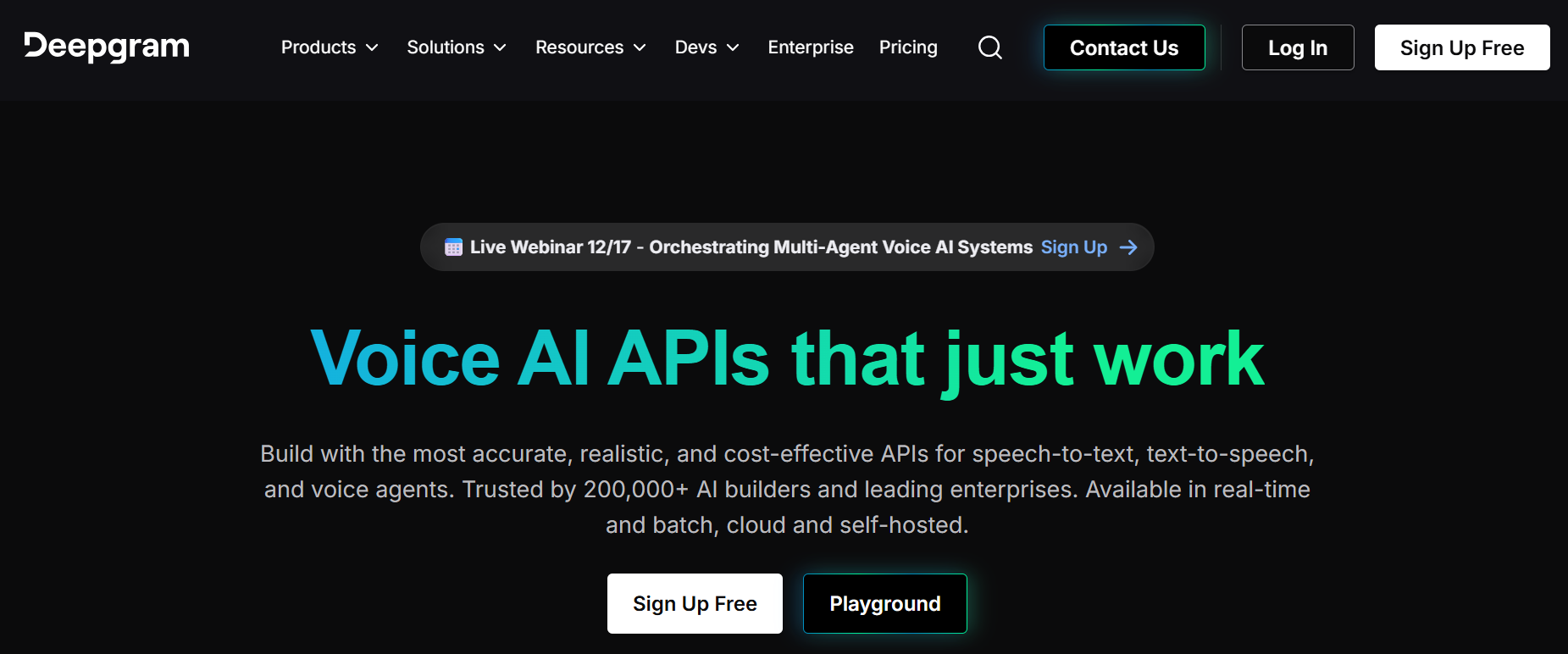
Deepgram has positioned itself as a comprehensive voice AI platform, offering everything from speech-to-text and text-to-speech to conversational AI capabilities. With its end-to-end, broad learning architecture and developer-focused approach, it has become a popular choice for enterprises building voice-enabled applications at scale.
To create this Deepgram review, the platform has been analyzed extensively. Based on the findings, Deepgram is the ideal choice if:
You need a unified platform combining speech-to-text, text-to-speech, and voice agents
You want custom model training for industry-specific vocabulary
You require flexible deployment options, including on-premise
You value having conversational AI capabilities in one integrated stack
However, Deepgram might not be the best choice if:
You need transcription support for more than 40 languages
You want a focused speech-to-text solution without additional platform complexity
You prefer a provider that doesn't use customer data for model training by default
For teams with these priorities, Gladia represents a notably different approach in the speech AI space: a pure-play specialist focused exclusively on transcription and audio intelligence, supporting over 100 languages with native code-switching. This review includes a detailed comparison with Gladia at the end, as the contrast between Deepgram's generalist platform strategy and Gladia's specialist positioning helps illustrate the trade-offs teams face when choosing a speech AI provider.
If multilingual accuracy and a focused speech AI partner are already top priorities, Gladia's free tier is available here.
Update: update on Gladia's pricing
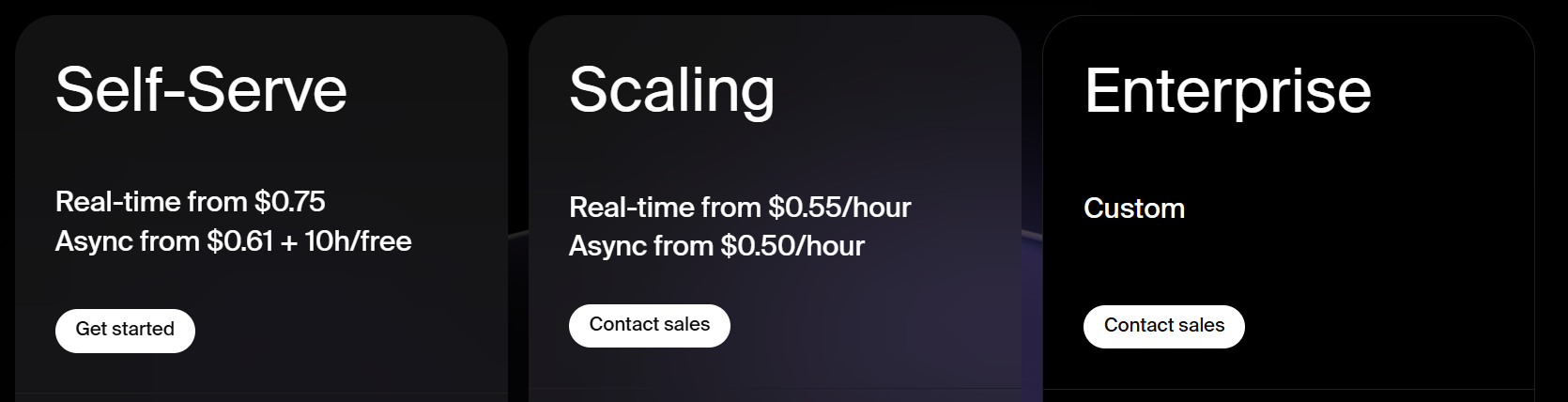
Since publishing this article, Gladia has updated its pricing structure. There are now three plans: Starter, Growth, and Enterprise. The Starter plan is pay-as-you-go at $0.61/hr for async and $0.75/hr for real-time, with 10 hours free each month. The Growth plan unlocks volume discounts with rates as low as $0.20/hr for async and $0.25/hr for real-time. Enterprise comes with custom pricing, unlimited concurrency, zero data retention, SLAs, and dedicated support. All paid plans include every feature and language, GDPR, HIPAA, and SOC 2 Type 2 compliance, and data opt-out.
The founders, all former physicists from the University of Michigan, initially built wearable devices to record their daily conversations. The challenge of searching through hundreds of hours of audio led Stephenson to apply learning techniques he had developed for detecting dark matter signatures in waveform data.
This origin story shaped Deepgram's technical approach: rather than using traditional speech recognition methods, they built an end-to-end broad learning architecture that processes audio directly. The company has since raised over $100 million in funding, including investments from NVIDIA, Y Combinator, and Madrona.
Today, Deepgram positions itself as more than a transcription service.
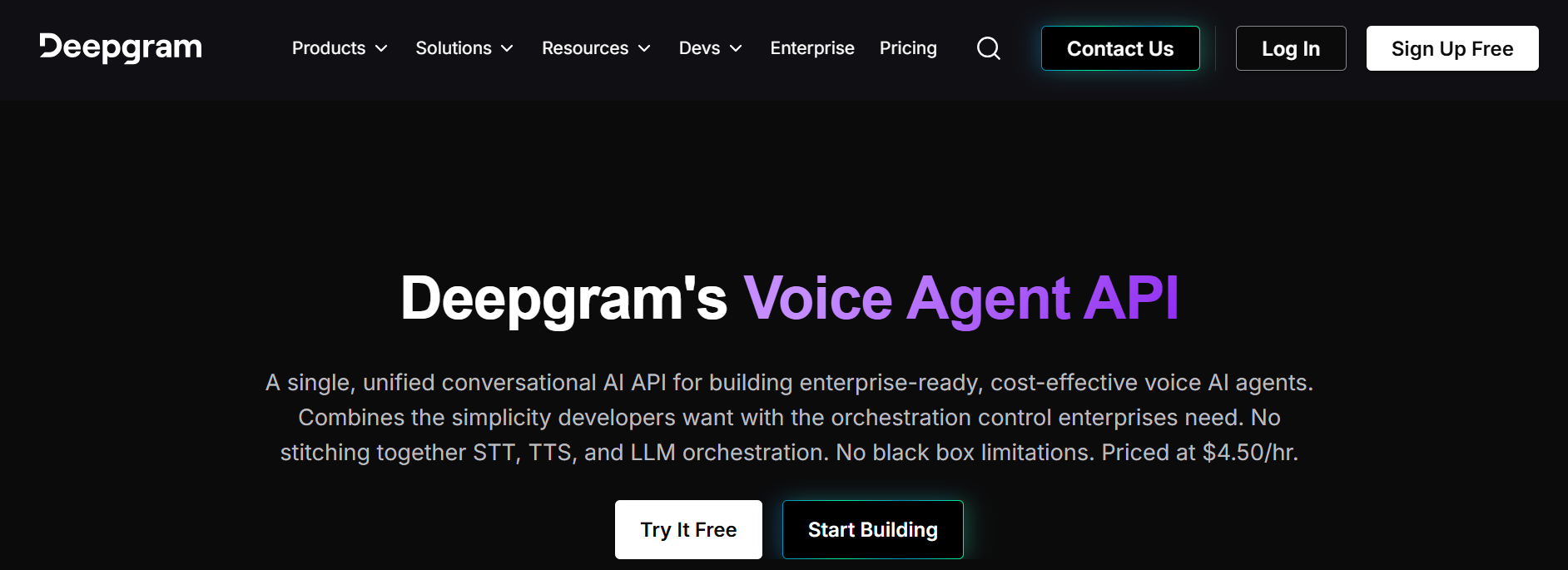
The platform offers a unified voice AI stack that includes speech-to-text (STT), text-to-speech (TTS) through their Aura product, audio intelligence features, and a Voice Agent API for building conversational AI applications. This comprehensive approach targets developers and enterprises who want to build voice-enabled products without stitching together multiple services.
With a growing team, Deepgram serves customers ranging from startups to Fortune 100 companies, particularly in contact centers, media, healthcare, and finance.
Deepgram pros & cons
Pros
Cons
✅ High accuracy with end-to-end learning architecture
❌ Fewer languages than some competitors (40+ vs 100+)
✅ Comprehensive platform: STT, TTS, and Voice Agents
❌ Pricing can escalate with high volumes and add-ons
✅ Custom model training for domain-specific vocabulary
❌ TTS language support still expanding (currently 7 languages)
✅ Flexible deployment: cloud, VPC, and on-premise options
❌ Platform complexity may exceed needs for STT-only use cases
✅ Low latency under 300ms for real-time transcription
❌ Opting out of data training forfeits 50% discount
Deepgram review: how it works & key features
Speech-to-text API: fast transcription with multiple model options
Deepgram's core offering is its Speech-to-Text API, which supports both real-time streaming via WebSocket connections and batch processing via REST API.
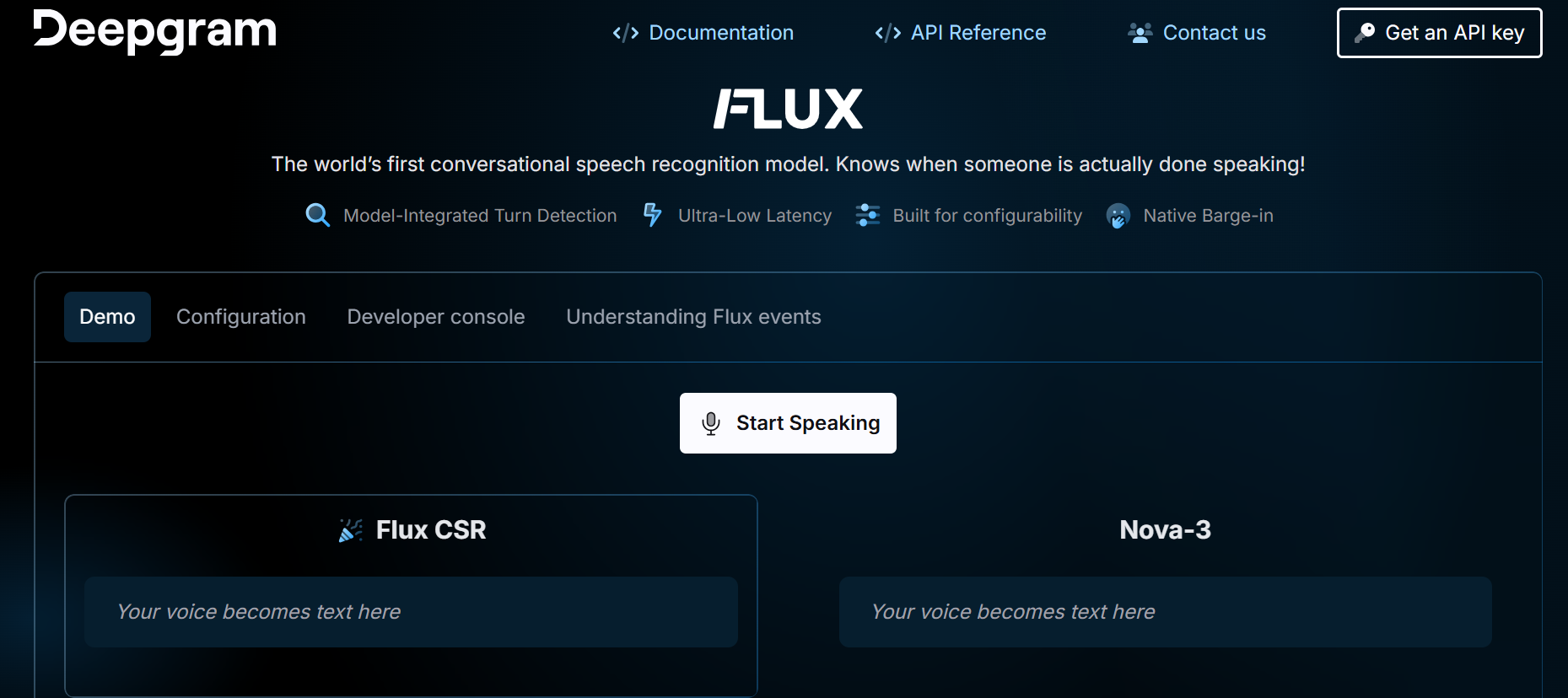
The platform offers several model options: Nova-3 is their latest general-purpose model optimized for accuracy, while Flux is designed specifically for real-time conversational AI with lower latency.
The API accepts audio in various formats and returns transcripts with word-level timestamps and confidence scores. Key features include speaker diarization (identifying different speakers without specifying the number beforehand), smart formatting that adds punctuation and formats entities like dates and phone numbers, and the ability to boost recognition of specific keywords.
For batch processing, Deepgram can transcribe one hour of audio in approximately 30 seconds. Real-time transcription achieves latency under 300 milliseconds. The platform supports over 40 languages, including multilingual code-switching capabilities, with specialized models for healthcare terminology.
Text-to-speech API: Aura for voice synthesis
Deepgram's Text-to-Speech offering, branded as Aura, converts written text into spoken audio.
The Aura-2 model is designed for enterprise applications, featuring over 40 distinct voices with various personas and localized accents.
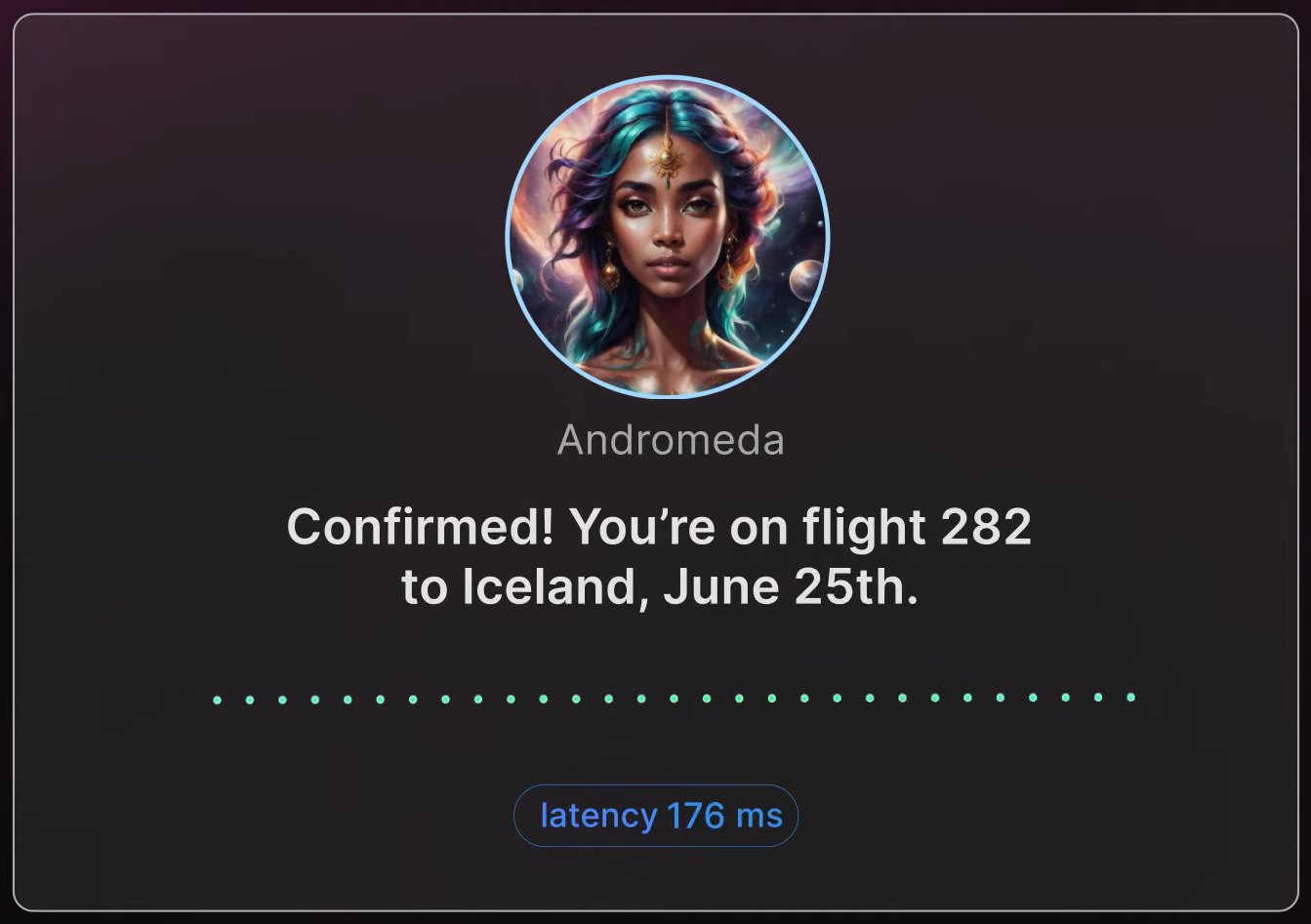
The API supports both REST endpoints for single requests and WebSocket connections for streaming text-to-speech, which is particularly useful when generating audio from large language model outputs. Deepgram emphasizes sub-200ms time-to-first-byte latency, making Aura suitable for real-time conversational applications.
The voices are trained on conversational data rather than narrated scripts, which Deepgram claims produces more natural-sounding output for interactive scenarios. Language support now includes English, Dutch, French, German, Italian, Japanese, and Spanish, with continued expansion planned.
Audio intelligence: extracting insights from speech
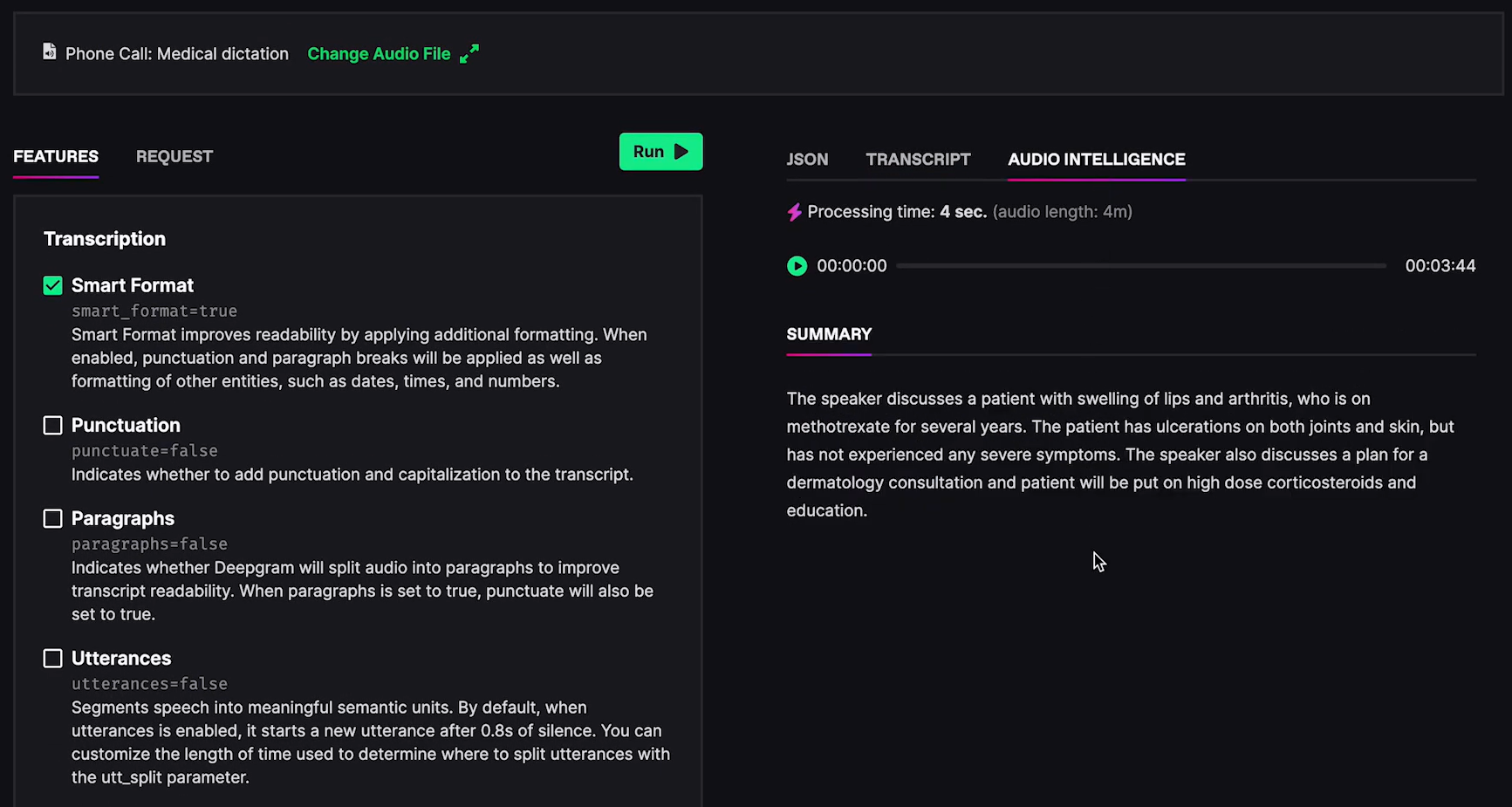
Beyond transcription, Deepgram provides audio intelligence features that analyze the content of audio files.
These features are accessed through the same API as transcription, with results returned in structured JSON format. The models are designed to be task-specific rather than general-purpose, which Deepgram claims improves accuracy for specialized use cases.
Voice agent API: building conversational ai
The Voice Agent API represents Deepgram's move into the conversational AI space.
It provides a unified interface that combines speech-to-text, large language model orchestration, and text-to-speech into a single pipeline.
The API handles real-time conversational dynamics, including interruption detection (when users speak while the AI is talking) and turn-taking prediction. Developers can use Deepgram's integrated stack or bring their own LLMs and TTS models while still using Deepgram's orchestration layer.
Function calling capabilities allow the voice agent to interact with external systems, such as querying databases or triggering actions based on conversation context. The system maintains conversation history and supports real-time prompt updates.
Where Deepgram falls short
While Deepgram offers a comprehensive voice AI platform, several considerations may affect certain use cases. These trade-offs reveal a platform optimized for full-stack voice AI development rather than specialized multilingual transcription.
Language coverage and accuracy: Deepgram supports over 40 languages, though with varying degrees of accuracy across its language portfolio.
Some users have reported accuracy issues with common European languages like French and Danish, prompting migrations to specialized multilingual providers. For organizations requiring broader linguistic coverage, some competitors support over 100 languages. If your use case involves many less common languages or frequent code-switching between languages, a specialized multilingual provider may be more suitable.
Platform complexity for STT-only needs: The comprehensive nature of Deepgram's platform (spanning STT, TTS, audio intelligence, and voice agents) may be more than what some organizations need. For teams that simply require high-quality transcription without the voice agent and TTS capabilities, the platform's breadth can translate to unnecessary complexity.
Pricing considerations at scale: While Deepgram's base transcription rates are competitive, the modular pricing structure means costs can accumulate.
Deepgram uses a per-minute billing model.
For its recommended multilingual model, Nova-3 Multilingual is priced at $0.0092/min on Pay As You Go (approximately $0.55/hr). Features like speaker diarization ($0.0020/min), redaction ($0.0020/min), and keyterm prompting ($0.0013/min) are billed as add-ons on top of that base rate.
Audio Intelligence features (sentiment analysis, topic detection, summarization, and intent recognition) use an entirely different billing unit, priced per token rather than per minute, making direct per-hour comparisons with all-inclusive providers difficult.
Organizations with high volumes and multiple feature requirements should carefully calculate total costs, as a fully-featured Deepgram configuration can approach or exceed the rates of providers that bundle all features into a single price.
Additionally, Deepgram's listed rates require participation in their Model Improvement Program, and opting out means forfeiting the 50% discount.
Data usage considerations: Deepgram's default configuration includes participation in their Model Improvement Program, where audio data may be used to improve their models. Opting out is available, but comes at a cost: customers forfeit their 50% discount on listed rates. Some privacy-conscious organizations prefer providers where data exclusion is included in the standard pricing.
Generalist expansion may create competitive tension: As Deepgram expands into end-to-end voice AI solutions, including TTS and voice agents, companies building their own voice agent products may find their infrastructure provider increasingly competing in the same space.
These considerations aren't oversights; they reflect Deepgram's strategic focus on building an integrated voice AI platform with broad capabilities. However, they create opportunities for alternatives that prioritize focused speech AI, extensive multilingual support, and transparent pricing.
The Deepgram alternative we recommend: Gladia
Gladia takes a different approach: a speech AI platform built from the ground up for multilingual excellence.
Unlike Deepgram's expansion into voice AI generalist territory, Gladia deliberately stays vertical in the speech recognition space. This "pure player" positioning means Gladia focuses exclusively on transcription and audio intelligence.
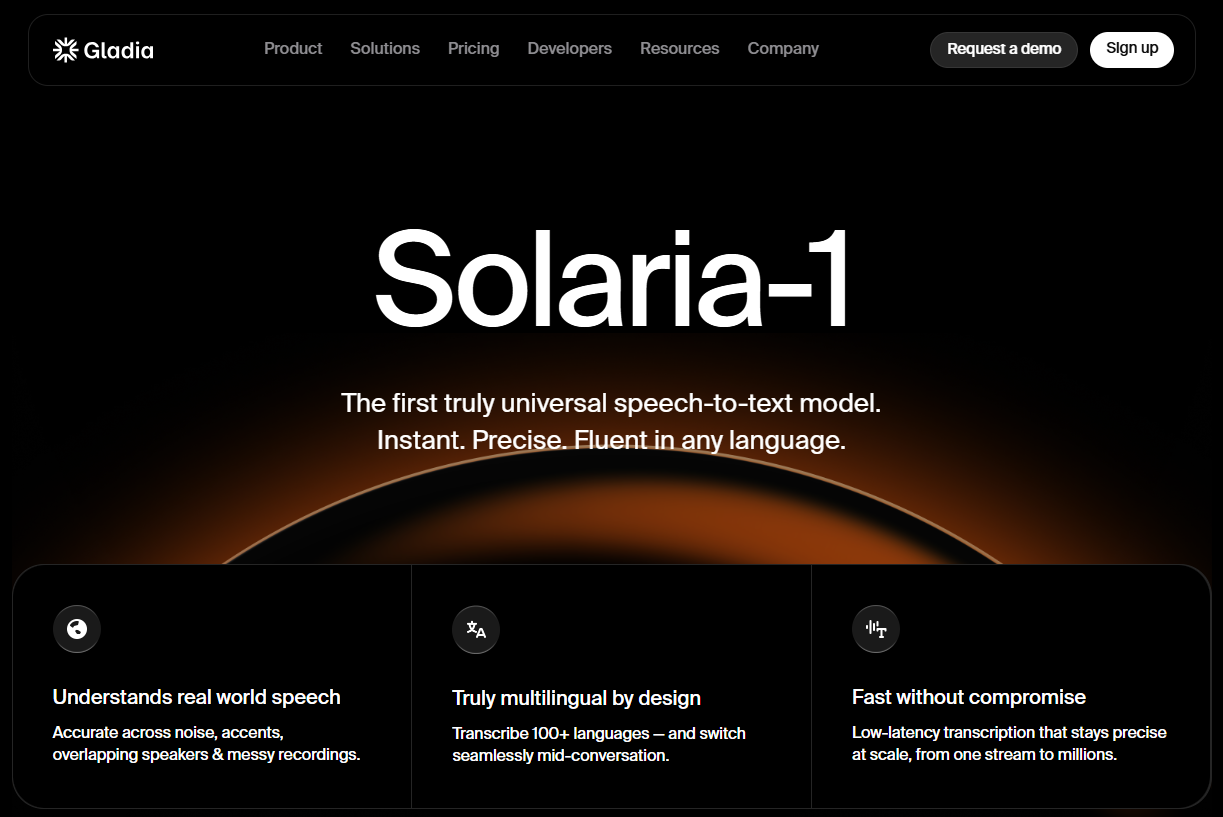
The model delivers industry-leading accuracy with a 94% Word Accuracy Rate across English, Spanish, French, and other common languages when tested on real-world, noisy audio.
What sets Solaria apart is its approach to latency.
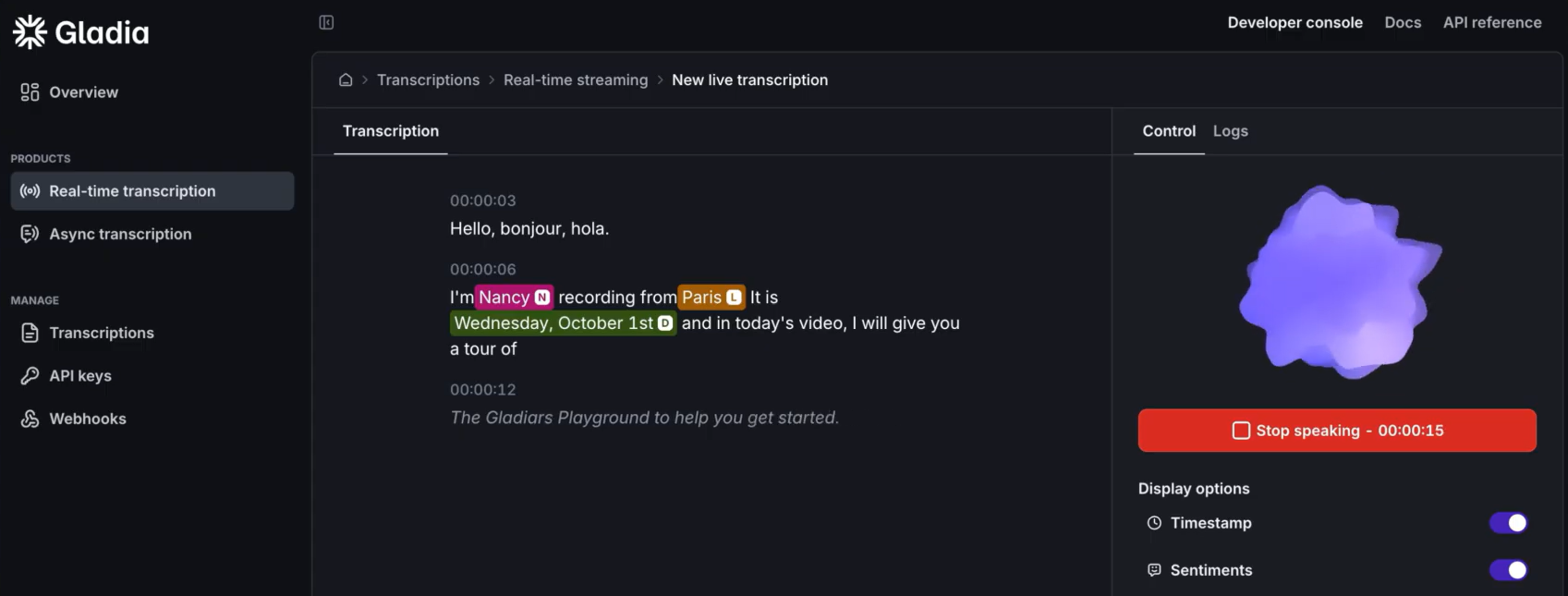
While many providers report "under 300ms" latency, Gladia distinguishes between partial latency (time to first transcript) and final latency (time to complete, stable transcript). Solaria delivers partial transcription in under 103ms; approximately twice as fast as leading alternatives, enabling the kind of natural, uninterrupted dialogue that real-time voice applications demand.
The model was trained on over 1.5 million hours of diverse audio, including noisy and phone-quality recordings, to ensure performance in real-world conditions. This includes adaptive speech processing for loud call center environments and robust handling of background noise.
Multilingual excellence: 100+ languages with native code-switching
The platform offers native code-switching, meaning it can transcribe conversations where speakers switch between languages naturally; a capability that's essential for international teams but often poorly supported by competitors.
This includes support for many underserved languages that other providers don't cover, such as Bengali, Punjabi, Tamil, Urdu, Persian, Hebrew, Pashto, and 42 others completely unsupported by alternatives. As a European-founded company, multilingual capability has been foundational to Gladia's identity from the start, not an afterthought.
Independent benchmarks on datasets like Google FLEURS and Mozilla Common Voice show Gladia's Solaria model outperforming Deepgram's Nova-3 across multiple languages, particularly in challenging conditions with accents and background noise.
Precision: beyond basic transcription
Gladia emphasizes "precision"; accurately transcribing specific entities like email addresses, names, phone numbers, and industry-specific terminology. Internal benchmarks on noisy telephony audio show Gladia's precision is at least 17% more accurate than alternatives, including Deepgram.
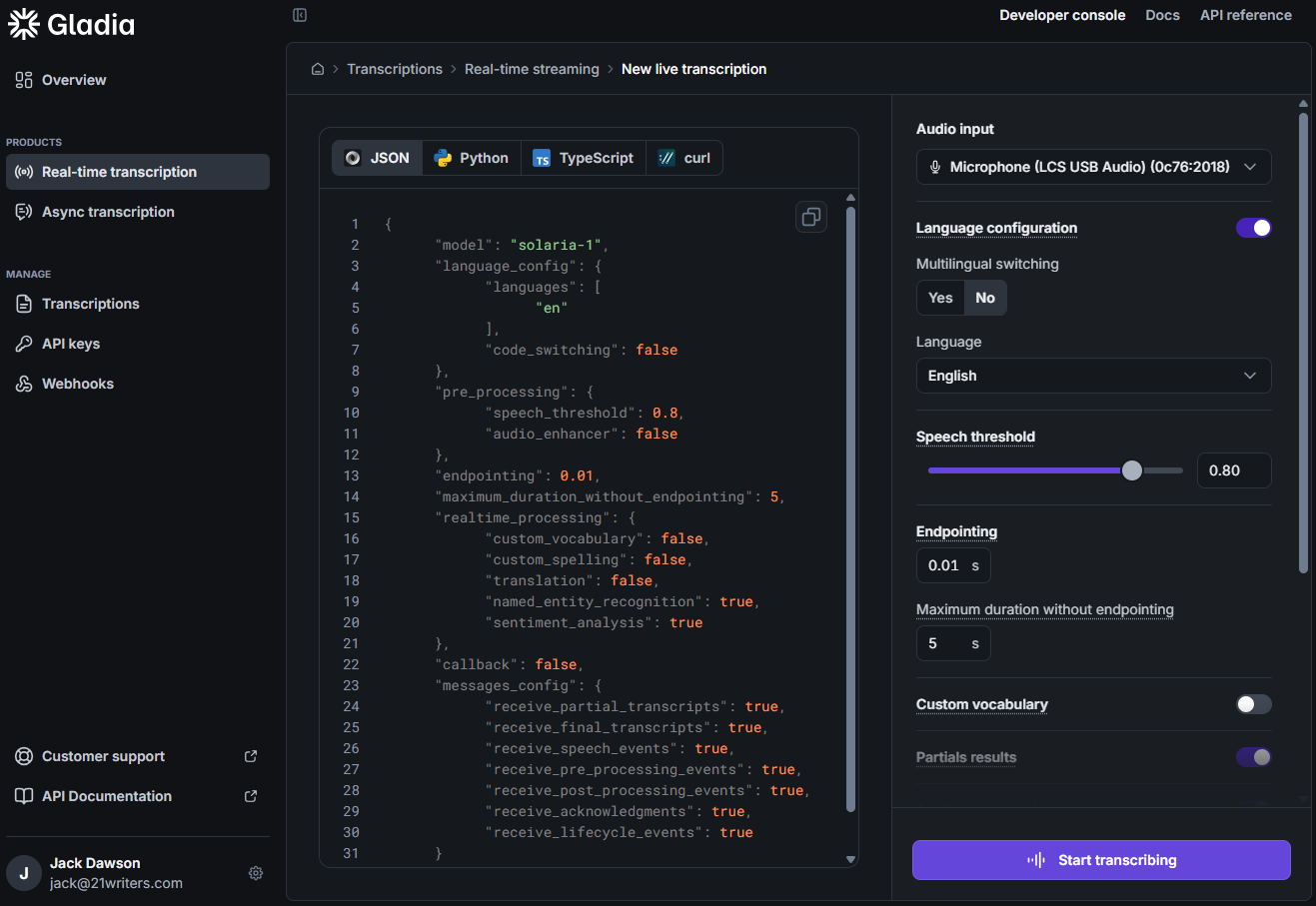
The platform offers custom vocabulary with dynamic, per-user, per-language, and per-term weighting capabilities, enabling high precision in specialized domains like medical, financial, and legal transcription.
Named entity recognition (NER) automatically identifies people, organizations, locations, and dates, while hallucination reduction ensures key business data gets accurately transcribed without fabrication. This precision focus addresses a common pain point: generic transcription services that struggle with accents and spelled-out content like "firstname.lastname@gmail.com."
Audio intelligence: bundled, not billed separately
Gladia bundles audio intelligence features as part of the platform rather than charging separately for each capability:
Word-level timestamps are included by default, enabling precise subtitle generation and audio navigation. This all-inclusive approach means teams can move from basic transcription to full audio intelligence without additional procurement or surprise costs.
Privacy and compliance: a non-negotiable approach
Gladia takes a distinct position on data privacy.
Gladia is headquartered in both Paris and New York City, and defaults to European cloud providers for hosting to respect GDPR constraints. Customers can request other geographies as needed.
The key differentiator is Gladia's approach to model training: for paid customers, audio data is not used to retrain models; and this protection is included in the pricing, not sold as an upsell. Free tier users should note that their data may be used for model improvement. This contrasts sharply with providers who charge customers a premium (or require forfeiting discounts) to opt out of data training.
Gladia holds SOC 2 Type 1 and Type 2 compliance, along with HIPAA compliance for healthcare applications. For Enterprise customers, enhanced data retention options, including zero-day data retention, provide maximum control over sensitive audio data.
Built for builders: developer experience and support
Gladia provides clean APIs, language-agnostic SDKs, and well-maintained documentation designed to help developers move quickly from proof-of-concept to production.
The platform integrates with voice agent frameworks like Pipecat and LiveKit, as well as Recall and Meeting BaaS for AI-powered meeting assistants and note-takers, enabling seamless adoption for companies building real-time voice applications.
As a focused startup rather than a large platform provider, Gladia emphasizes personalized customer support.
Enterprise customers get dedicated Slack channels, forward-deployed engineers, and senior technical staff who collaborate directly with customers to help them deploy and innovate jointly; the kind of hands-on, tier-1 engagement that larger providers often can't offer.
Gladia has grown to serve over 300,000 developers and 2,000+ enterprise customers, including Attention, Circleback, Method Financial, and VEED.IO.
Deepgram vs Gladia: comparison summary
Aspect
Deepgram
Gladia
Market Position
Voice AI generalist
Speech AI specialist
Languages Supported
40+
100+
Code-Switching
Available (limited language pairs)
Native capability across all languages
Text-to-Speech
⭐⭐⭐⭐⭐ Aura-2 with 40+ voices
❌ Not offered (partners with TTS providers)
Voice Agent API
Available
Not offered
Partial Latency
Under 300ms
Under 103ms
Speaker Diarization
Available (add-on pricing)
Available (included, powered by pyannoteAI)
Audio Intelligence
Sentiment, summarization, topics, intent
Sentiment, summarization, NER, translation
Pricing Model
Per minute + add-on fees; Audio Intelligence billed per token separately
Per hour with features included (RT from $0.55/hr, Async from $0.50/hr at Scaling tier)
Data Privacy
Opt-out forfeits 50% discount
No training on paid plans (included)
Headquarters
San Francisco, USA
Paris & New York (Dual HQ)
Deployment Options
Cloud, VPC, on-premise
Cloud, custom hosting for Enterprise
Primary Focus
End-to-end voice AI platform (STT, TTS, Voice Agents)
Pure-play speech AI (transcription + audio intelligence)
Final verdict
The choice between Deepgram and Gladia depends on your specific requirements, what you're building, and your strategic considerations for vendor relationships.
Choose Deepgram if you're developing a comprehensive real-time voice AI application that needs speech-to-text, text-to-speech, and conversational AI capabilities in one integrated platform.
It's particularly well-suited for teams building voice agents who want a single vendor across the entire voice stack, those who need the flexibility of custom model training for specialized domains, and organizations that value having STT, TTS, and LLM orchestration unified under one API.
The Voice Agent API makes it a strong choice for contact centers and customer service applications where you want everything from audio input to spoken response in one place.
Choose Gladia if your primary need is transcription and audio intelligence across a wide range of languages, especially if your conversations involve speakers who switch between languages naturally. It's the better fit for:
Voice agent builders, CCaaS platforms, and meeting assistant developers who want an infrastructure partner that won't compete with them. Choosing a provider today means choosing their roadmap, and Gladia commits to staying in their lane as a speech AI specialist.
Multilingual enterprises requiring support for 100+ languages with native code-switching and accent robustness.
Privacy-conscious organizations that want data protection included in the pricing, not sold as an upsell requiring forfeited discounts.
Teams prioritizing GDPR compliance and European data residency as a default.
Real-time applications where sub-103ms partial latency matters for natural conversation flow.
Gladia's focused approach delivers best-in-class speech AI without requiring you to adopt an entire voice platform or worry about your provider entering your market space.
Both platforms deliver accurate, low-latency transcription with robust audio intelligence features. The decision ultimately comes down to whether you need the breadth of a full voice AI suite or the depth and focus of a specialized speech AI partner, and whether you want a provider that might expand into your space or one committed to being infrastructure you can build on.
Contact us
Your request has been registered
A problem occurred while submitting the form.
Read more
Speech-To-Text
MiFID II and FCA call recording: compliance for voice transcription in finance
Speech-To-Text
Why speech-to-text accuracy matters upstream of your LLM